Burying America's Nuclear Sins in Thoreau: Red Rock
New Mexico's bold new idea for radioactive uranium waste? Dig it out of abandoned mines and dump it in a landfill by Thoreau-because nothing says 'clean-up' like burying the problem somewhere else.
_______________________________________
by Christopher Rael August 16, 2025
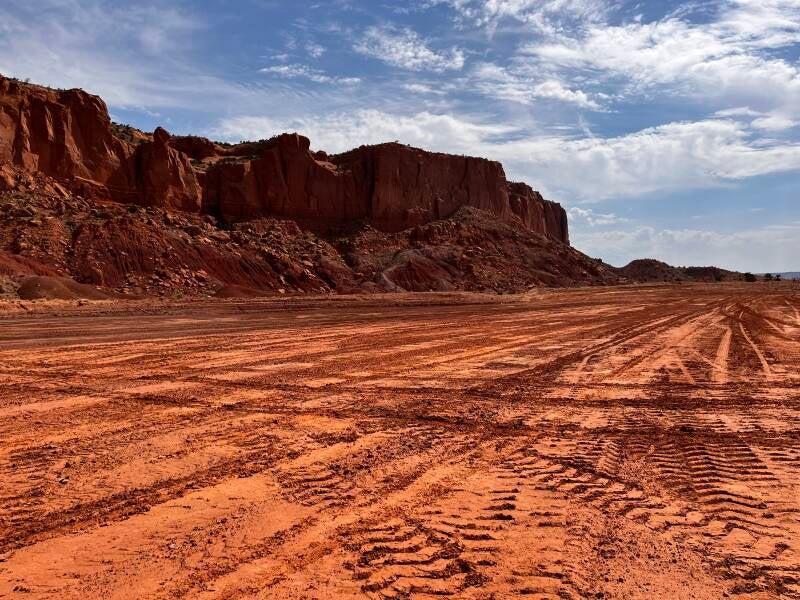
This morning, under a piercing blue sky, I stood at the Red Rock Landfill in Thoreau, New Mexico. The place is framed by towering red cliffs, their faces rippled with millions of years of geologic memory. In their shadow, a different kind of history is about to be written — one involving trucks, radioactive material, and a first-of-its-kind plan to bury radioactive waste inside a commercial landfill.
New Mexico is littered with the ghosts of uranium mining. From the 1950s through the Cold War, hundreds of mines fueled America’s nuclear ambitions. When the mines shut down, they left behind more than abandoned tunnels: piles of radioactive material that still leach radon gas into the air and radioactive particles into the water.
Church Rock, about 43 miles away, is one of the worst. The mine has been dormant for decades, but the contamination continues. For years, the question has lingered: what do we do with all this radioactive material?
The uranium buried in these mines is a leftover from the same mid-century America that gave us rock ’n’ roll, chrome bumpers, and the fantasy of eternal prosperity, relics of the Cold War’s nuclear fever dream. The same 1950s glow that sold us on American superiority also left glowing dust in the wind here in New Mexico.
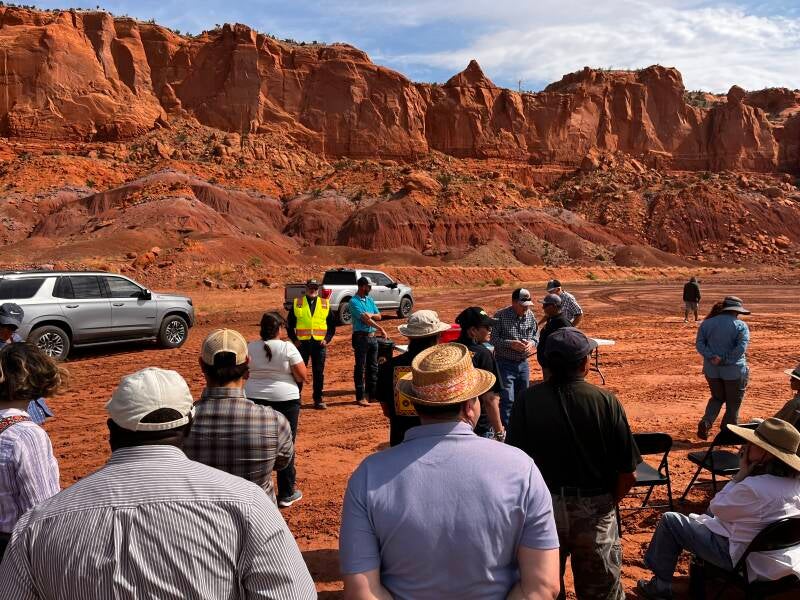
The U.S. Environmental Protection Agency and the landfill’s operators gathered a cross-section of people — state officials, federal regulators, Navajo leaders, local residents — to present their case.
The uranium waste, they explained, would be dug up from the Church Rock site, loaded into dump-truck-style haulers, covered with tarps, and transported down I-40 to the landfill. There, it would be buried in the ground, surrounded by multiple protective layers to keep it from escaping.
The engineering, they assured us, was sound. The plan was safe.
What they didn’t say was the thing everyone in the audience knew: nothing is ever perfectly safe.
Trucking radioactive waste through populated areas comes with hazards that no amount of PowerPoint can completely erase. What if a truck crashes? What if a tarp fails and radioactive dust blows into the air, settling into schoolyards and front porches?
Thoreau is home to elders and children — the people most vulnerable to long-term radiation exposure.
New Mexico’s track record for handling uranium contamination is far from perfect. Many of its “cleanup” efforts have turned into long-term problems of their own.
One audience member asked the question hanging unspoken in the air: If this cleanup money came from a $1 billion settlement, why here? Why this landfill?
The landfill’s spokesperson didn’t hesitate. “It was our idea,” he said. They approached the EPA. They had the land. They could do it.
It was a refreshingly honest answer — but also a revealing one. Landfills don’t bury radioactive waste for charity. There’s a major profit motive here, and everyone knows it.
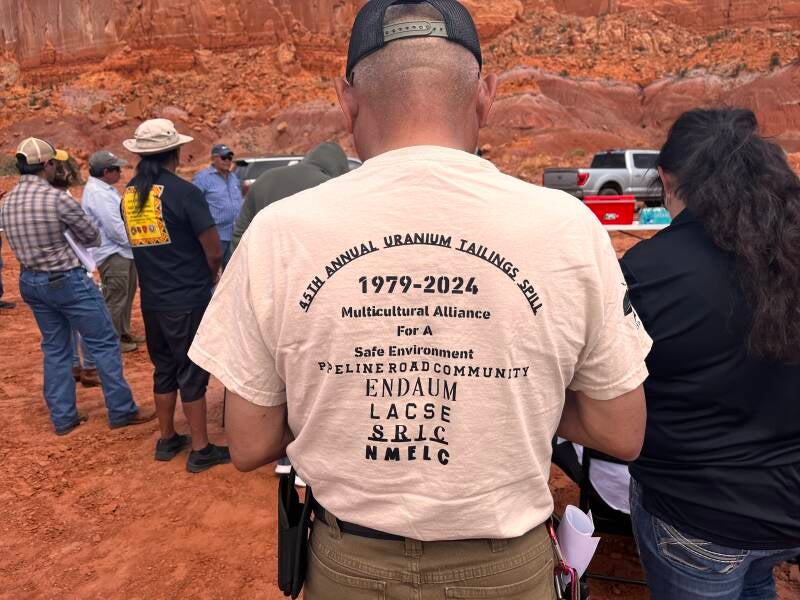
The Voices
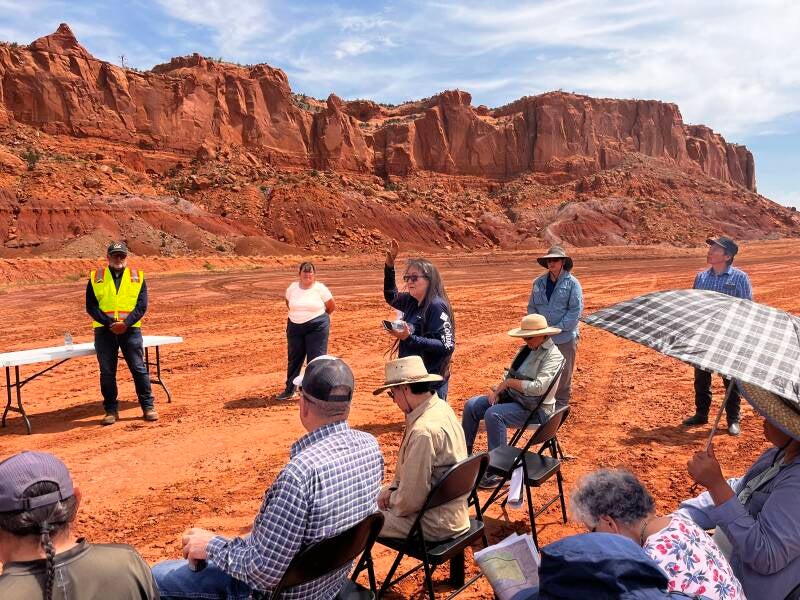
When the floor opened for public comment, the tone shifted from technical jargon to raw emotion.
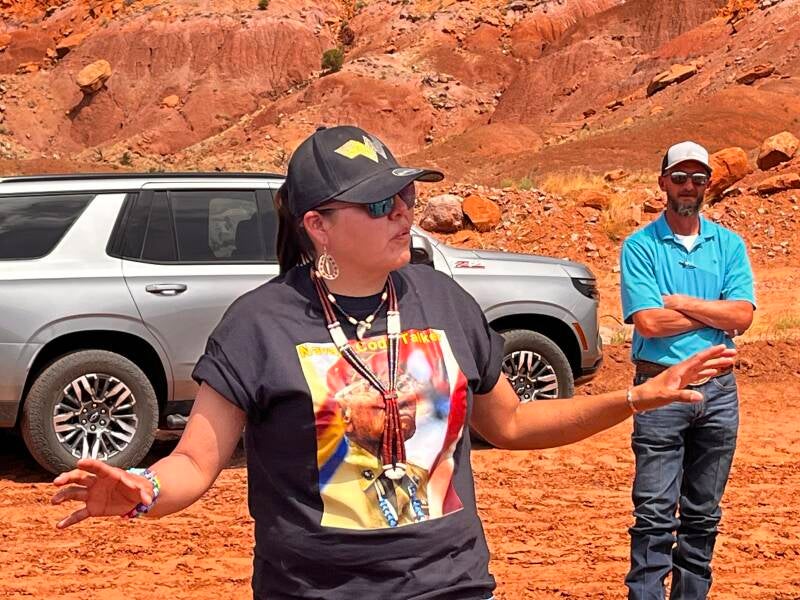
A Navajo woman from the Thoreau area stood and said this was the first time she’d heard all the details. Why hadn’t this been fully explained before? EPA officials countered that there had been public meetings and opportunities to comment. But “public meetings” in rural New Mexico often miss the very people most affected — especially when the history of mistrust runs as deep as it does here.
Then a woman from Church Rock rose to speak. She supported the plan, but with caution. She described friends and relatives who’d gotten sick from uranium exposure, including her own daughter, who needed surgeries to remove uranium from her body. She wanted the waste gone — but gone safely.
The Non-Comfort of Low-Level Promises
You don’t need to be a scientist, an engineer, or a moral philosophy professor to spot the trick in the language. The experts stand at the microphone and tell you, calm as you please, that the radiation in Thoreau will be “low.” Nothing to worry about, they say—it’s no worse than standing in the sunshine or getting a chest x-ray. They say it like it’s supposed to be comforting. But nobody’s out here getting x-rayed every single day for five years straight. Even the small doses add up. Especially when they never stop.
And this isn’t radiation sealed in a vault—it’s dust. Dust doesn’t stay put. It rides the wind, slips under doors, clings to kids’ shoes at recess, settles on laundry lines and dinner tables. The desert doesn’t care about containment. What the officials are calling “safe” is actually relentless: five years of invisible grit floating into schoolyards, kitchens, and lungs. That’s not a metaphor, that’s a reality. The radiation isn’t just background—it’s foreground, woven into the daily life of a community that didn’t ask for it. What the experts call “low level” is really just a slow, grinding exposure that no press release can spin into harmlessness.
The Irony of Thoreau
They tell us it’s a clean-up project, an act of environmental stewardship, as if moving radioactive material from a contaminated uranium mine to a landfill in Thoreau is the moral equivalent of sweeping dust into a corner. “Safer there,” the experts say, with the clinical tone of bureaucrats who will never live under the shadow of this decision.
But what an irony—to take the poisons of the nuclear age and bury them in a town named after Henry David Thoreau, a man who preached reverence for the natural world, who wandered ponds and woods in search of a purer life, who believed nature itself was the antidote to the sickness of human ambition.
Imagine Thoreau, ghost-walking through New Mexico, stumbling on the sight of dump trucks rumbling down highways with barrels of uranium tailings. Would he not recoil? Would he not see this as a grotesque parody of his philosophy—a society that once worshipped nature now using his name as the address for its waste?
The Indigenous Ledger
For Native people in the region, it’s not irony—it’s repetition. Another chapter in the long ledger of the U.S. government making decisions on their behalf, dismissing their warnings, overriding their rights, and treating ancestral lands as expendable.
They’ve seen it before: in the poisoned wells, in the dust that lingers in lungs, in the casual way “low-level radiation” is equated with the harmlessness of sunlight or an occasional X-ray. Except the sun doesn’t seep into the ground for centuries. Except an X-ray isn’t lodged forever in your soil, your aquifer, your food chain.
The government says expediency requires it—cheaper to move it here, faster to finish the job. But expediency always seems to outweigh safety when it comes to Indigenous lands. Convenience over justice. Economics over health. “Temporary solutions” that stretch into generations.
From Tourist to Witness
The longer I stood there, the more the mood shifted. This wasn’t kitsch. It wasn’t the eccentric Southwest I’d come to observe like a tourist at an oddball roadside attraction. It was personal, urgent, and painfully real for the people in the circle.
I started out aloof, detached, just passing through. But somewhere between the technical jargon and the raw testimony, I realized I was being pulled in.
I’m no longer a tourist. I’m not a local. I’m something else now — a witness, maybe. And once you’ve witnessed something like this, you can’t just drive away and leave it behind.
The Contract We Can’t Cancel
I haven’t made up my mind yet whether this is progress or another suicide mission. The official tale makes a kind of sense to my logical brain—the studies, the risk assessments, the equations that say this level of radiation is safe, that this landfill is engineered to contain it. On paper, it adds up. But in my soul, in the part of me that feels history more than it reads it, I’m not convinced.
It feels like a big commitment, almost like getting engaged—or worse, like signing up for a timeshare. The salesman—here it’s the government and their engineers—swears it’s the deal of a lifetime, a future you can count on. But you know the fine print will come back to bite. Engagements can collapse, timeshares can trap you forever, and once you’re locked in, you’re locked in. That’s what this project feels like: once the waste is buried, there’s no walking away, no easy annulment, no canceling the contract.
And maybe it works. Maybe the engineers are right, maybe the science holds, maybe this landfill becomes the shining example of how we can fix our past mistakes. But if it doesn’t—if something shifts, cracks, or fails—the consequences won’t be a bad investment or a broken heart. They’ll be irreversible. That’s the part that gnaws at me. Because when you’re dealing with nuclear waste, nothing is ever truly temporary, and the smallest failure can echo for generations.
Chris Rael is a writer, social commentator, and provocateur who explores the tapestry of culture, people, and the land.