
More Than Paint on Canvas: A Gathering of Art, Identity, and Community
An evening of character, conversation, and the living canvas in the room.
_______________________________________
by Christopher Rael February 19, 2026
Tonight I did something simple.
I walked into a room full of art.
The open house at the Hemet Valley Art Association Gallery wasn’t flashy. It wasn’t trying to be Los Angeles. It wasn’t pretending to be something it’s not. It was honest. Paintings lined the walls. Sculpture sat confidently on pedestals like it had something to say. Jewelry shimmered under soft lighting.
There were plein air landscapes still breathing with open sky and dusted sunlight, bold acrylics layered thick with color and conviction, intricate tapestries woven strand by strand with quiet patience. Hand-crafted jewelry that caught the light like small constellations, delicate sketches where a single line carried surprising emotion, and photography that froze ordinary moments long enough for you to see their weight. Oil, graphite, fiber, metal, lens — different mediums, different temperaments — yet all part of the same conversation unfolding across the walls.
You could feel the hours, the solitude, the stubborn persistence that artists pour into their work.
And then there were the people.
Right at the door stood Lynn Throckmorton, President of the Art Association, greeting me. Not in a “welcome to the event” way. In a welcome home way. She greeted me the way someone greets a neighbor, not the way someone greets a visitor. There’s a big difference. A visitor is someone you manage. A neighbor is someone you fold in.
Within minutes she had introduced me to half the room. Artists. Supporters. Volunteers. She made it feel like I’d been attending for years. That kind of warmth can’t be faked. It’s leadership through hospitality. The gallery doesn’t just exist because there’s art on the walls — it exists because someone like Lynn believes in it enough to open the door wide and pull people in.
Before long, Lynn introduced me to her longtime friend and kindred spirit, Linda Krupa.
Mayor Linda Krupa.
There’s something powerful about seeing civic leadership show up for the arts — not for optics, not for applause, but simply because it matters.
Linda told me about her sixteen years on the council. Three times as mayor. That’s not a fleeting term — that’s tenure. That’s someone who has seen Hemet through multiple seasons: growth, tension, reinvention, long nights and tough votes.
When someone with that kind of hard-earned civic experience chooses to stand in a room full of artists on a weeknight, it signals something subtle but important: Showing up matters.
There’s something grounding about that.
It also signals something deeper about a city’s priorities.
That maybe — just maybe — when you’ve seen everything a city has gone through over nearly two decades, you understand that what sustains a town isn’t just infrastructure or policy. It’s rooms full of people making beautiful things and talking to each other.
It quietly says: this matters.
Culture matters.
Creativity matters.
Rooms like this matter.


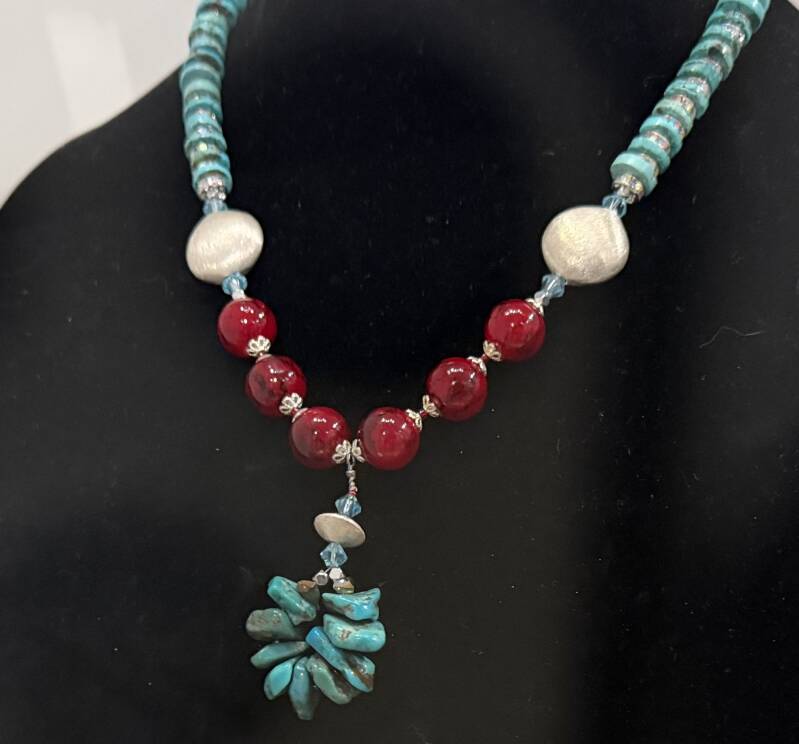
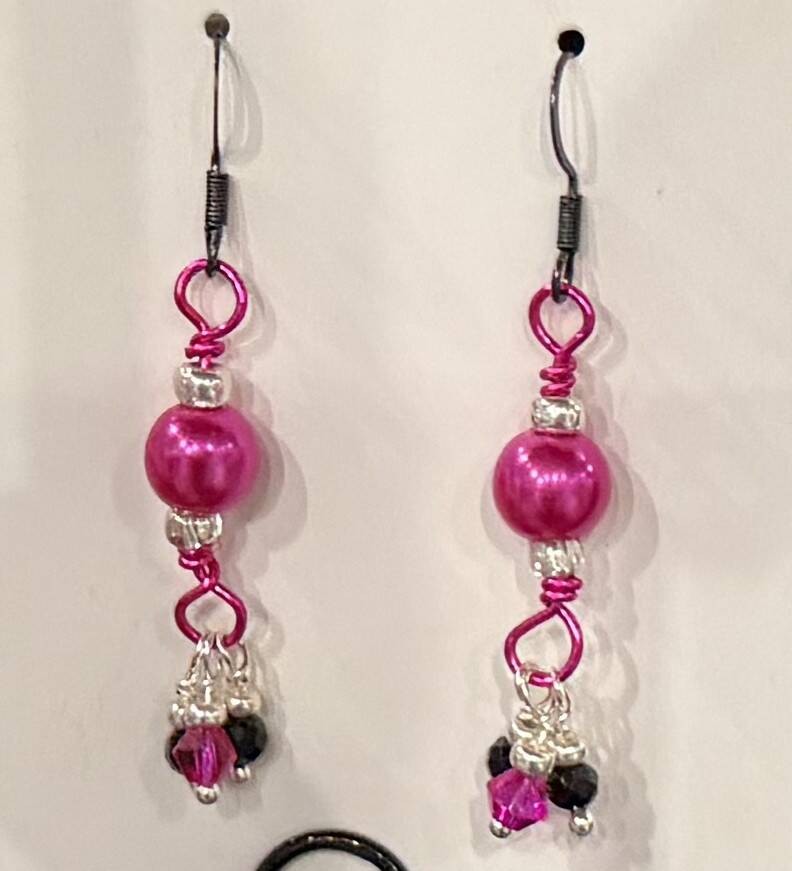
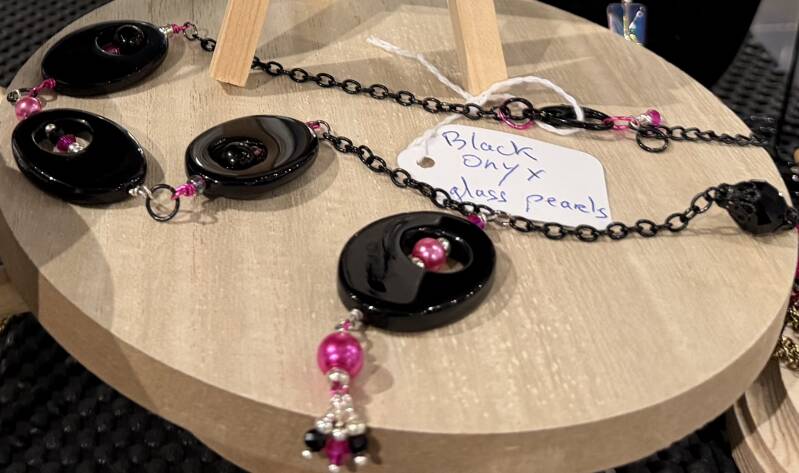
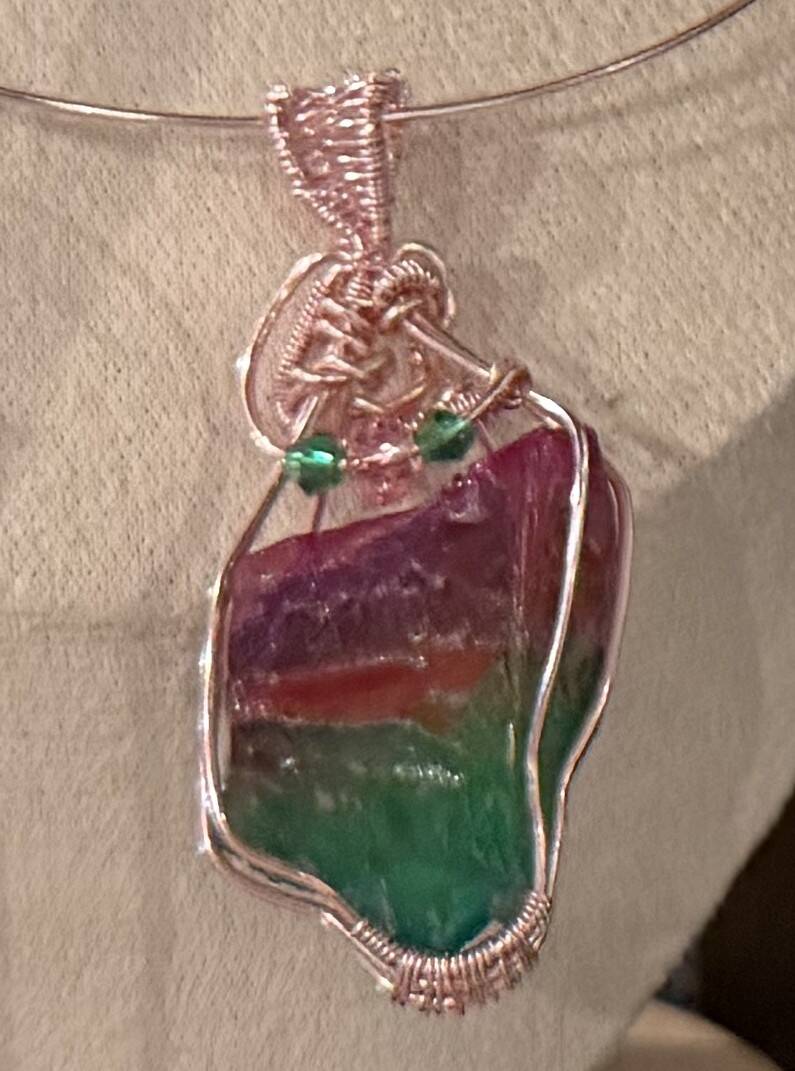
I met painters who spoke quietly but whose canvases spoke loudly. Sculptors who had shaped raw material into something alive. And then I met Laurence Bellocq — a transplanted Frenchwoman from Toulouse whose jewelry stopped me mid-sentence.
Her work is exquisite. It isn’t mass-produced sparkle. It’s character. Texture. Story. Each piece felt like it had lived a life before it ever reached the display, evidence of time, intention, and something deeply personal, holding a memory — quiet, layered, and waiting to be understood. You don’t just wear her jewelry — you inherit it. You keep it. You hand it down.
Then there was Art Majerus, the Gallery Director.
Majerus is a Luxembourgish — Germanic — surname derived from the Latin major, meaning greater, senior, of higher standing.
Art — creative expression.
Majerus — from major, meaning greater.
Put together, it almost sounds like “greater art.” Or “major art.”
For an Art Gallery Director named Art, that feels less like coincidence and more like a cosmic wink.
It’s not a literal translation.
But it is a pretty sublime alignment.
Naturally, Art is a 27-year veteran of the United States Navy — and there it is again, that echo of major. Not just in name, but in command.
Greater in origin.
Major in bearing.
Steady at the helm — now commanding a gallery instead of a ship.
Art told me about his life in the Navy — one step away from the Pentagon, seven aircraft carriers, deployments to far-off and exotic ports, steel decks and endless horizons. The kind of career that teaches precision, discipline, contingency planning, and how to operate when the stakes are real.
When he talked about it — about the scale of it, the discipline, the brotherhood — you could hear it in his voice.
Not nostalgia.
Weight.
The kind of steadiness that only comes from having stood on something massive while the world moved beneath you.
And yet here he stands as Gallery Director — a role that, in its own quiet way, may demand even more diplomacy.
He personally designed and supervised the installation of the track lighting — a detail most visitors never consciously register, yet one that determines whether a painting breathes or falls flat. In a gallery, light is not cosmetic. It is structural. And he understood that.
In the Navy, the mission was national defense. At the gallery, the mission is cultural stewardship. Different stakes. Same steadiness. And the Gallery is fortunate to have someone who brings that level of care — that quiet competence — to something as deceptively simple as making art look effortless.

And then — unexpectedly — two young people made the entire night feel electric. It was one more layer that carried the evening firmly into the realm of something singular.
Ely and Eduardo, students from Western Center Academy — the prestigious STEM college-prepatory school — stepped into the gallery wide-eyed, their smiles just as expansive in that way only youth can manage.
They were erudite, well-spoken young people who carried themselves with a level of poise that jolted you awake — a rare thing at any social gathering. They weren’t merely polite. They were attentive. Thoughtful. Curious.
When I asked about their school, they didn’t give me the generic answer you expect from teenagers. They spoke with earned pride and specificity. Western Center Academy holds high academic standards; students have to maintain grades and meet expectations. The bar is clear — and it’s high. The rigor is not an aesthetic, it’s the deal. But what struck me was how they framed it. Not as complaint. Not as pressure. As preparation. As something worth rising to.
They framed it as opportunity. As accountability. As a place where you rise to the level of the challenge instead of shrinking from it. There was no bravado. Just grounded confidence.
In a room full of seasoned artists, veteran leaders, and community builders, these two students somehow bridged the generations. They reminded me that creativity isn’t only expressed through paint or metal — it lives in those who think deeply, ask good questions, and show up to a gallery on a random Thursday evening to be part of something bigger. Did I mention they were in 6th and 7th grade?
Part of a thriving community is not only safeguarding the past and celebrating the present — it’s nurturing the next generation to step into those rooms with confidence, curiosity, and pride. And Ely and Eduardo did exactly that.


And that’s when the evening shifted from pleasant to profound.
In that moment the gallery stopped being just a room with art on walls. It became a glimpse of Hemet’s interior life — the part you don’t see if you only drive through or read about it from a distance. Artists making work. Civic leaders showing up without fanfare. Students carrying themselves with discipline and pride. People greeting one another like they still believe community is a verb.
That’s when you start to see the ecosystem.
High academic standards.
Creative expression.
Civic leadership.
Community gathering.
It’s all connected.
Just paint. Metal. Stone. Conversation. Laughter. Community.
The ancient human need for gathering in a room and making meaning together.
A town becomes interesting not just because it has art on the walls — but because it creates spaces where its stories can come to life. That night this town was unmistakably interesting.
Meeting everyone I did that night, in that setting, made something very clear to me:
Hemet’s story isn’t just about where it’s been.
It’s about who keeps showing up for it.
Cities evolve because of consistency. Because of people who stay. People who build. People who return to the room again and again.
Just a steady rhythm of people showing up for their town.
And that matters more than most people realize — because something lasting doesn’t announce itself, it unfolds.
Tonight I did something simple.
I walked into a room full of art.
Hemet Valley Art Gallery is located at 144 N Harvard St., Hemet, CA 92543 in historic downtown Hemet and operates as a nonprofit gallery showcasing local artists and exhibitions.
Christopher Rael is a writer, education innovator, and provocateur chronicling the people, ideas, and quiet revolutions that make communities feel alive. Through storytelling rooted in curiosity and civic imagination, he explores the intersections of culture, creativity, and possibility — always looking for the rooms where something real is happening.
